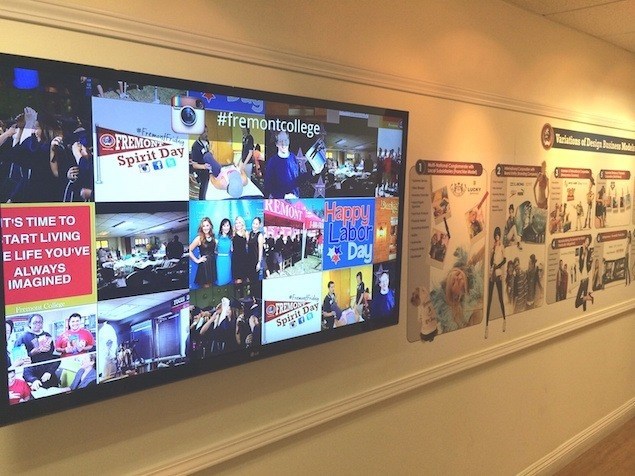
Social media no longer lives only on phones. In retail stores, conferences, offices, stadiums, and campuses, it has moved onto screens—and it’s changing how people interact with brands in physical spaces.
That shift is exactly why social media digital signage has become one of the most effective engagement tools brands use today. Not because it looks modern, but because it reflects real human activity in real time.
Instead of pushing marketing messages, brands now display what people are already saying. And that subtle shift—from broadcasting to showcasing—makes all the difference.
What Is Social Media Digital Signage?
Social media digital signage refers to digital screens that display live or curated content pulled from social media platforms like Instagram, X (Twitter), LinkedIn, TikTok, or YouTube.
Unlike traditional digital signage that shows static ads or pre-designed slides, digital signage social media displays update automatically. They pull in posts using hashtags, mentions, tags, or handles and show them on screens across physical locations.
In simple terms:
- Digital signage pushes messages
- Social media signage reflects conversations
That reflection creates trust—fast.
Why Brands Are Shifting to Digital Signage Social Media
Audiences today are immune to polished marketing. They pay attention to people. Social media digital signage works because it removes skepticism. Visitors don’t need to believe your claims—they can see others experiencing your brand in real time.
When brands switch from static screens to social media wall digital signage, they usually notice:
- Longer attention spans near screens
- More social participation using branded hashtags
- Higher recall compared to static promotions
- Stronger emotional engagement
From experience, the biggest benefit isn’t impressions—it’s participation. People post because they want to see themselves featured.
How Social Media Digital Signage Changes Behavior
Social proof behaves differently on screens than it does online. When someone sees user-generated content on a website, they scroll. When they see it on a large screen in a public space, they react.
Here’s what typically happens:
- People pause when they recognize real faces or posts
- Attendees actively look for the event hashtag
- Groups gather around social media screens
- Sharing increases once people see others being featured
This feedback loop is why live social media walls outperform generic digital displays.
Where Brands Use Social Media Digital Signage
The use cases vary, but the goal is the same: make people feel included.
Retail Stores
Retailers display customer photos, reviews, and tagged posts near product shelves. Seeing real people using a product reduces hesitation far more effectively than promotional graphics.
Events & Conferences
A live social media wall digital signage setup shows attendee posts in real time, driving hashtag usage and extending engagement beyond the venue.
Corporate Offices
Companies use internal social media signage to highlight employee achievements, announcements, and culture moments—building belonging rather than broadcasting memos.
Hospitality & Travel
Hotels, resorts, and restaurants showcase guest posts, creating inspiration loops that feel authentic instead of staged.
Education & Campuses
Universities use social media screens to display student life, events, and announcements—creating a community-driven information flow.
Each environment benefits differently, but the psychological impact stays the same: people trust people.
Social Media Digital Signage vs Traditional Digital Signage
Understanding this difference helps position the strategy correctly.
Traditional digital signage:
- One-way communication
- Pre-designed visuals
- Low interaction
Social media digital signage:
- Two-way visibility
- Real-time content
- Audience participation
The screen stops being an ad board and becomes a live reflection of community activity.
What Makes a Strong Social Media Wall Digital Signage Setup
Not all social walls perform equally. The best setups feel intentional, not chaotic.
A high-performing social media signage solution should include:
- Multi-platform aggregation
- Content moderation (manual + automated)
- Flexible layouts for different screen sizes
- Real-time updates without page reloads
- Analytics to measure engagement
Platforms like Taggbox Social Walls are commonly used because they support these requirements while remaining GDPR compliant—a critical factor for brands operating across the US and EU.
Built-in consent handling and content rights management aren’t optional anymore; they’re foundational.
How to Set Up Social Media Digital Signage (Step-by-Step)
Setting it up doesn’t need to be complex—but it must be done right.
Step 1: Choose Content Sources
Decide whether you’ll pull content using hashtags, mentions, tagged posts, or handles.
Step 2: Moderate Before Display
Always filter content before it goes live. The goal is authenticity, not chaos.
Step 3: Design for Distance
Social media screens should be readable from several feet away. Large visuals, minimal text.
Step 4: Select Screen Placement
Place displays where people naturally pause—entrances, lobbies, food areas, waiting zones.
Step 5: Monitor and Rotate Content
Freshness matters. Even real content loses impact if it stagnates.
Using Social Media Digital Signage for Campaigns
Campaigns perform significantly better when audiences know their content might appear publicly.
During launches or events:
- Promote the branded hashtag clearly
- Display the social feed in real time
- Highlight featured posts
This is where pairing signage with a hashtag aggregator tool becomes powerful. It removes manual effort while increasing participation organically.
FAQs
What is social media digital signage?
Social media digital signage displays curated social content on screens to increase engagement, trust, and real-time audience participation.
Is digital signage social media safe for public spaces?
Yes, when using moderated and GDPR-compliant tools like Taggbox Social Walls.
Do social media screens really improve engagement?
They do—especially at events and retail locations where visual social proof encourages participation.
Which platforms work best for social media wall digital signage?
Instagram for visuals, LinkedIn for credibility, and X for live discussions and events.
Conclusion
Social media digital signage isn’t about putting feeds on screens—it’s about putting people at the center of the experience.
When brands replace static messaging with real conversations, screens stop being background noise and start becoming engagement magnets. With thoughtful placement, strong moderation, and compliant tools, social media signage transforms physical spaces into living, social environments.
In 2025, the brands that stand out won’t shout louder.
They’ll let their audience speak—and display it proudly.
 Social Media Wall
Leave a comment