In 2026, brands don’t struggle with visibility.
They struggle with trust.
Customers see your ads. They scroll past your posts. They visit your website. But before buying, they ask one silent question:
“What are real people saying about this brand?”
That’s exactly where a social media aggregator becomes powerful.
This guide goes deep — not surface-level definitions — but real meaning, strategy, features, use cases, and why social media aggregators are becoming essential growth infrastructure for brands.
What Is a Social Media Aggregator?
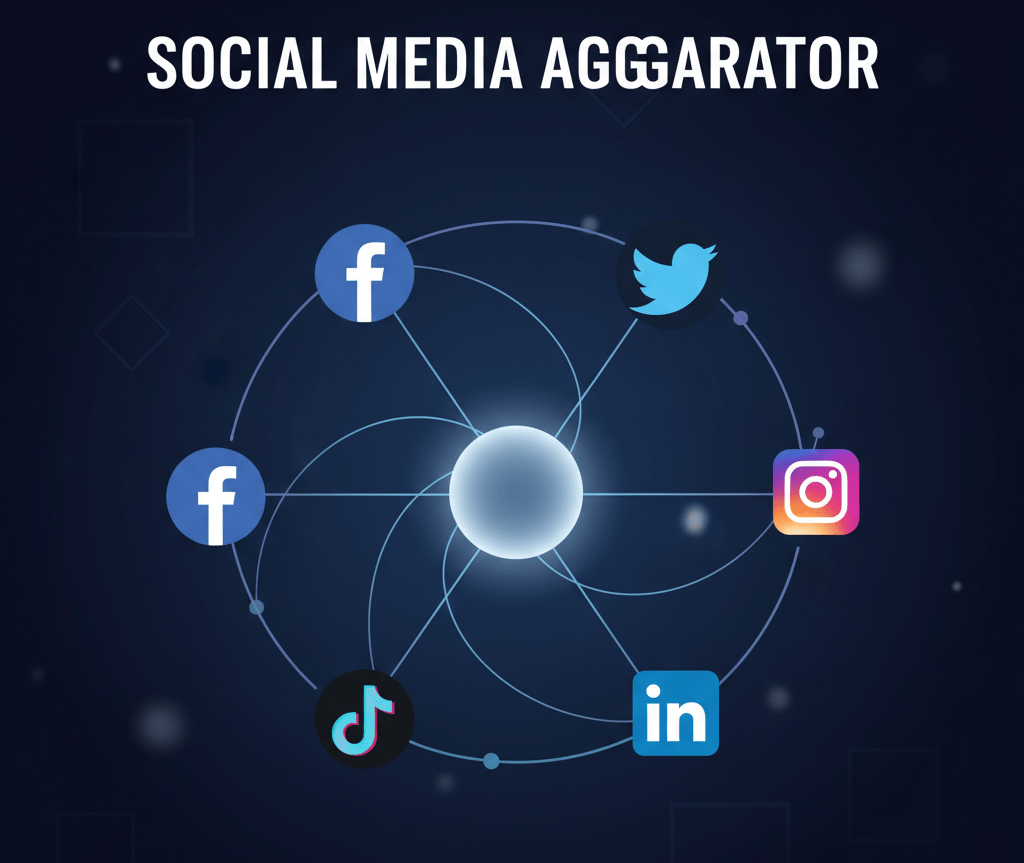
A social media aggregator is a tool that collects content from multiple social platforms and displays it in one unified, customizable feed.
Instead of keeping social proof scattered across Instagram, Facebook, LinkedIn, TikTok, and YouTube, a social media content aggregator brings everything together.
It allows brands to:
- Aggregate social media feeds
- Display hashtag campaigns
- Showcase user-generated content (UGC)
- Embed reviews
- Create live event walls
- Build social proof galleries
In simple terms:
A social media aggregation platform turns your social presence into a conversion asset.
What Does Social Media Aggregation Actually Do?
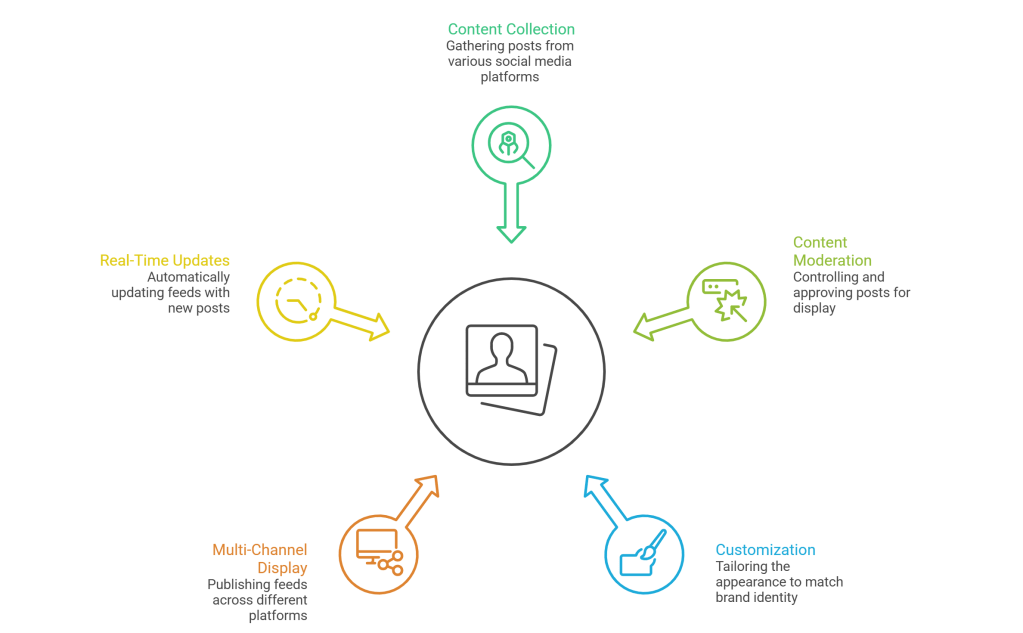
Beyond just collecting posts, a modern aggregator in 2026 typically offers:
1. Content Collection
Pulls content via:
- Hashtags
- Mentions
- Handles
- Tags
- Public feeds
- Review platforms
2. Content Moderation
You control what appears.
Approve posts manually or set auto-moderation rules.
3. Customization
Match your:
- Brand colors
- Fonts
- Layout styles (grid, slider, carousel, masonry)
- CTA buttons
4. Multi-Channel Display
Publish feeds on:
- Websites
- Landing pages
- Product pages
- Event screens
- In-store digital displays
- Email campaigns
5. Real-Time Updates
Feeds automatically update as new posts are published.
Why Social Media Aggregators Matter in 2026
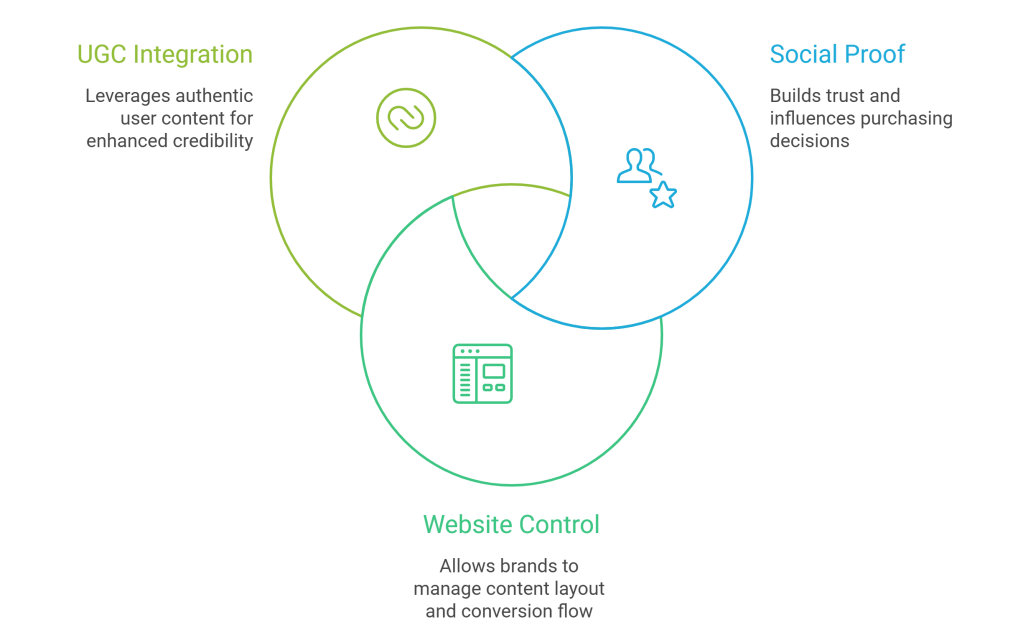
1. Social Proof Impacts Buying Decisions
People trust customers more than brands.
A strong social media aggregator for website pages:
- Reduces hesitation
- Increases time on site
- Boosts add-to-cart rates
- Improves conversion rates
Instead of telling visitors how great you are, you show them.
2. Platforms Own Reach. You Own Your Website.
Social platforms change algorithms constantly.
But when you use a social media aggregator tool to bring content onto your website, you control:
- Layout
- Placement
- Calls-to-action
- Conversion flow
It shifts social content from rented media to owned media.
3. UGC Outperforms Brand Ads
Authentic user content:
- Feels relatable
- Feels unbiased
- Feels trustworthy
A strong social aggregation tool helps brands turn organic mentions into structured trust-building experiences.
Types of Social Media Aggregators
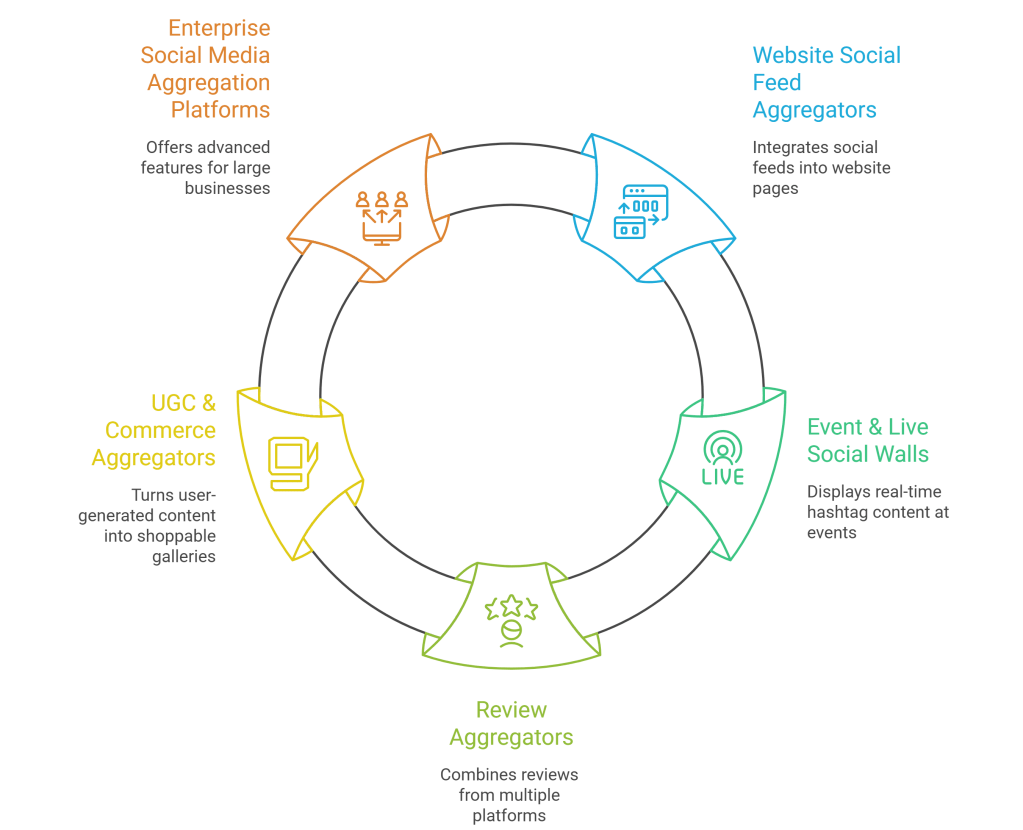
Understanding the different types helps choose the best social media aggregator for your needs.
1. Website Social Feed Aggregators
Designed specifically as a social media aggregator for website integration.
Used on:
- Homepages
- Product pages
- Landing pages
- Testimonials sections
2. Event & Live Social Walls
Display real-time hashtag content at conferences, concerts, and virtual events.
These social media aggregator apps increase participation and brand visibility.
3. Review Aggregators
Combine Google Reviews, Facebook Reviews, and testimonials into one feed.
4. UGC & Commerce Aggregators
Designed for eCommerce brands to turn UGC into shoppable galleries.
5. Enterprise Social Media Aggregation Platforms
Offer:
- API access
- Advanced moderation
- Deep analytics
- Multi-location management
Key Features of Social Media Aggregator to Look For in 2026
If you’re evaluating social media aggregator tools, this section matters the most.

1. Official API-Based Content Collection
A professional social media aggregation platform must use official APIs.
Why it matters:
- Ensures compliance
- Prevents account bans
- Provides stable data flow
- Maintains content quality
Avoid any social media aggregator relying on unstable scraping methods.
2. Multi-Platform Support
A true social network aggregator should support:
- TikTok
- YouTube
- Twitter/X
- Reviews platforms
The more networks supported, the more complete your social proof ecosystem becomes.
3. Advanced Moderation Controls
This is where many best free social media aggregator options fall short.
Look for:
- Manual approval workflows
- AI-based content filtering
- Keyword blocking
- Profanity filters
- Spam detection
Moderation ensures only brand-safe content appears.
4. Design Customization & Branding
Your feed should not look generic.
A modern social media content aggregator should allow:
- Custom fonts
- Color adjustments
- Layout styles (grid, slider, carousel, masonry)
- Custom CSS
- Branded CTA buttons
It should match your website seamlessly.
5. Performance Optimization
One common fear: “Will this slow my website down?”
High-quality social aggregation tools offer:
- Lazy loading
- CDN delivery
- Optimized scripts
- Mobile responsiveness
Speed impacts SEO and user experience.
6. Rights Management for UGC
This is critical in 2026.
The best social media aggregator should include:
- Automated permission requests
- Rights approval tracking
- Legal compliance logs
Brands must secure content usage rights before republishing.
7. Real-Time Updates
Your social media feed aggregator should automatically update as new content is published.
Static feeds feel outdated.
Live feeds feel dynamic.
8. Analytics & Conversion Tracking
A powerful social media aggregator tool offers:
- Engagement metrics
- Click tracking
- Conversion attribution
- Feed performance data
This transforms your feed from decoration into measurable marketing infrastructure.
9. CMS & eCommerce Integrations
Look for integrations with:
- WordPress
- Shopify
- Webflow
- Wix
- Magento
- BigCommerce
The easier it integrates, the faster it drives ROI.
10. Scalability & Multi-Location Support
For enterprise brands, a strong social media aggregation platform should:
- Support multiple feeds
- Manage multiple domains
- Offer team collaboration
- Provide permission controls
Common Mistakes Brands Make
- Treating it like a design element instead of a conversion tool
- Not moderating properly
- Placing feeds below the fold
- Using a weak best free social media aggregator without scalability
- Ignoring UGC rights management
How to Choose the Best Social Media Aggregator
When selecting the best social media aggregator, ask:
- Does it use official APIs?
- Is moderation flexible?
- Can I customize design fully?
- Does it offer analytics?
- Is it mobile optimized?
- Does it support all my social channels?
- Can it scale with my growth?
Avoid tools that look attractive but lack backend strength.
The Future of Social Media Aggregators
The next wave of social media aggregator apps will include:
- AI-powered content ranking
- Sentiment analysis
- Personalized feed display
- Shoppable integrations
- Deeper attribution tracking
- Privacy-first architecture
The role of the social media aggregation platform is evolving from “content display” to “conversion engine.”
Final Thoughts
A social media aggregator is not just a widget.
It’s a system that:
- Centralizes your brand’s social presence
- Strengthens trust
- Increases engagement
- Supports conversions
- Enhances user experience
In 2026, brands that successfully aggregate social media feeds don’t just look active — they look credible.
And credibility converts.
 Social Media Wall
Leave a comment