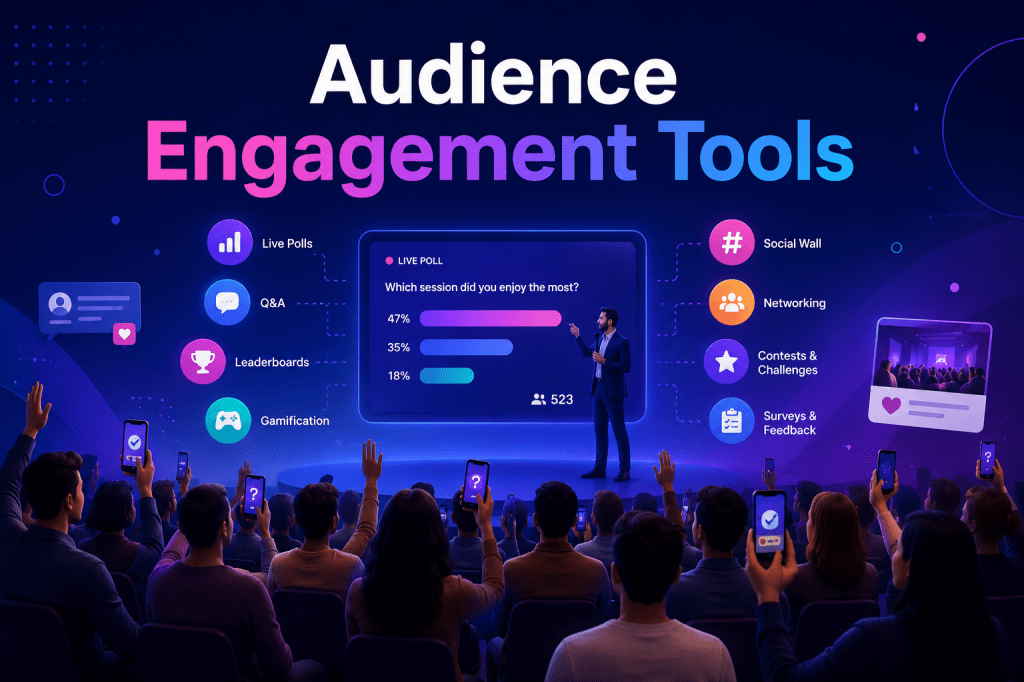
Audience engagement is no longer about simply getting people into a room. Attendees expect opportunities to participate, share opinions, connect with others, and interact with event content in real time.
The right audience engagement tools can turn a passive event into an interactive experience. From live polls and Q&A sessions to social media walls, quizzes, games, and networking, these platforms give attendees more ways to participate while helping organizers understand what resonates with their audience.
In this guide, we’ll explore 9 audience engagement tools that can help event organizers create more interactive and memorable experiences. The list includes social media walls, polling platforms, gamification tools, photo experiences, and event engagement platforms.
What Are Audience Engagement Tools?
Audience engagement tools are software and platforms that give event attendees more ways to participate, interact, share, and connect throughout an event. They go beyond traditional presentations by creating opportunities for two-way communication between attendees, speakers, brands, and organizers.
From live polling and Q&A sessions to social media walls, quizzes, leaderboards, and networking, these tools help turn passive attendees into active participants.
Here are some of the most popular types of audience engagement tools:
- Live Polling: Ask questions during sessions and collect real-time responses from your audience.
- Q&A: Let attendees submit questions, upvote the most relevant ones, and interact directly with speakers.
- Interactive Slides: Add polls, questions, quizzes, and other interactive elements directly to presentations.
- Gamification: Create fun challenges, quizzes, games, and competitions that encourage attendees to participate.
- Leaderboards: Display participant scores and rankings to create friendly competition and motivate attendees to stay involved.
- Reactions: Give attendees simple ways to react to sessions, content, or presentations in real time.
- Feedback & Surveys: Collect attendee opinions, session feedback, and event reviews to understand what worked and what can be improved.
Why Use Audience Engagement Tools at Your Event?
Choosing the right engagement technology can influence how attendees participate throughout the event. Here are some of the biggest advantages:
1. Encourage Active Participation
Interactive polls, quizzes, games, and Q&A sessions give attendees an easy reason to participate instead of simply watching.
2. Make Events More Interactive
Adding interactive elements throughout presentations and sessions can create more opportunities for attendees to respond, share ideas, and join conversations.
3. Capture Real-Time Feedback
Live responses help organizers understand attendee opinions, preferences, and questions while the event is happening.
4. Increase Social Sharing
Social media walls and UGC-focused experiences encourage attendees to share their event moments, creating additional visibility beyond the venue.
5. Improve Networking Opportunities
Some engagement platforms help attendees discover other participants, start conversations, and arrange meetings, making networking a more natural part of the event.
6. Create Memorable Experiences
Gamification, photo booths, interactive displays, and live audience activities can add entertainment and give attendees experiences worth remembering.
How to Choose an Audience Engagement Tool That Fits Your Event
Not every event needs the same type of engagement. A conference may benefit from live Q&A and polling, while a festival may need social sharing and interactive games.
Before choosing a platform, consider these factors:
- Engagement type: Look for the interactions your audience is most likely to use, such as polls, Q&A, games, networking, or social sharing.
- Ease of participation: Attendees should be able to join quickly from their phones or other devices without a complicated setup.
- Real-time interaction: For live events, responses and content should appear quickly enough to keep the experience dynamic.
- Customization: Branding options can help the tool fit naturally into your event experience.
- Audience size: Check whether the platform can support your expected number of participants.
- Analytics: Look for useful data on participation, responses, content, or attendee activity.
- Integrations: If you’re already using event, presentation, streaming, or registration software, check whether the tool works with your existing setup.
- Event format: Consider whether you need support for in-person, virtual, or hybrid events.
The most effective approach is often to combine complementary engagement methods—for example, a social media wall for attendee content alongside a polling or quiz tool for session interaction.
9 Best Audience Engagement Tools
1. Social Walls by Taggbox
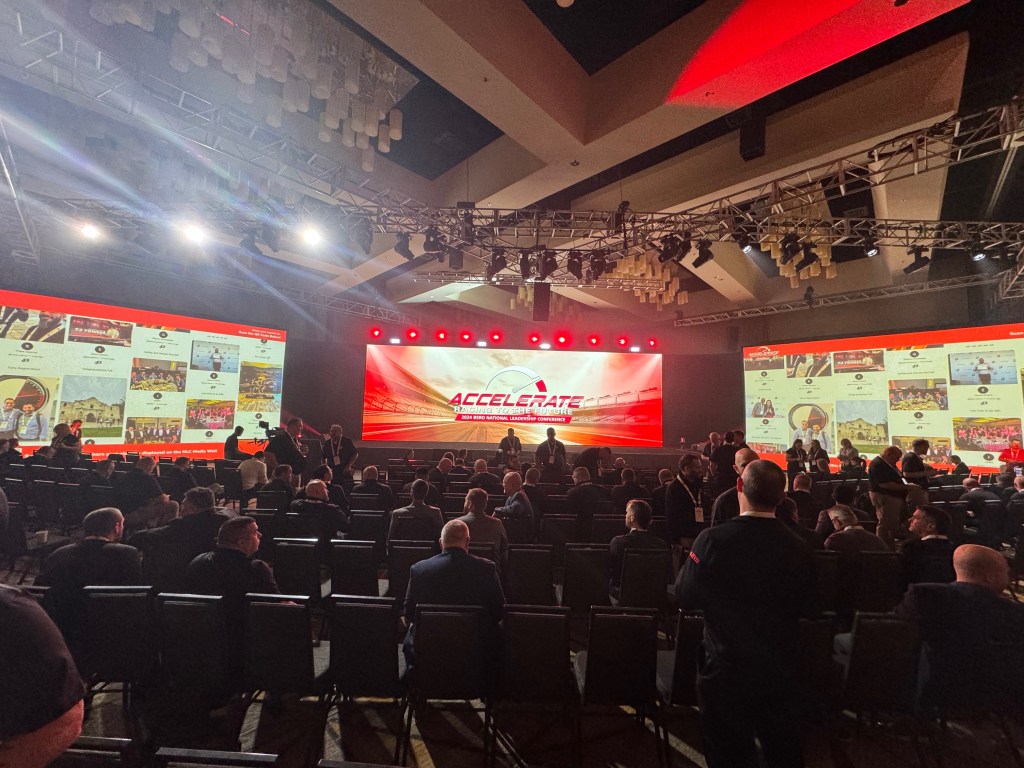
Social Walls by Taggbox is an audience engagement platform for events that helps organizers turn attendee content and interactions into live experiences. It lets you collect social posts, photos, and videos while also engaging attendees through features such as live polls, reactions, contests, challenges, leaderboards, and QR-based content sharing.
Organizers can display curated social content, audience responses, announcements, and interactive elements across event screens, digital signage, venue displays, and other touchpoints. With real-time updates and engagement analytics, Social Walls helps event organizers encourage participation, showcase attendee experiences, and keep audiences actively involved throughout the event.
Key features:
- SnapUp QR Uploads
- Live Polls & Reactions
- Leaderboards & Gamification
- Studio & Media Mix
- Custom Themes & Branding
- Real-time social media feeds
- Analytics & Engagement Tracking
- Hashtag and user-handle aggregation
- UGC collection and display
- Customizable wall
- Event screen and digital signage publishing
Best for: Events, conferences, trade shows, festivals, and brands looking to turn attendee social content into a live event experience.
2. Mentimeter
Mentimeter helps presenters turn sessions into interactive conversations. Attendees can participate using their phones, tablets, or laptops, while responses can appear live during a presentation.
Key features:
- Live polling
- Interactive quizzes
- Word clouds
- Live Q&A
- Surveys and feedback
- Presentation integrations
3. Glisser
Glisser focuses on making presentations more interactive by allowing speakers to share presentation content with attendees while creating opportunities for audience participation.
Key features:
- Interactive presentations
- Audience participation
- Live feedback
- Audience questions
- Content sharing
- Session interaction
4. Crowd Mics
Crowd Mics is designed to make audience participation easier during live sessions. Instead of relying exclusively on traditional microphones, it can help organizers bring audience members into discussions and facilitate more direct interaction.
Key features:
- Audience participation
- Live Q&A interaction
- Audience microphone functionality
- Speaker and attendee interaction
- Moderated participation
5. LoQuiz
LoQuiz brings gamification into events through quizzes, challenges, and interactive activities that encourage attendees to participate and compete.
Key features:
- Interactive quizzes
- Treasure hunts
- Photo-based challenges
- Written clues
- GPS-based activities
- Real-time participation
- Gamified experiences
6. Captello
Captello combines interactive event activations with gamification and lead capture. Its platform currently promotes more than 60 interactive games and activations, including spin-to-win experiences, scavenger hunts, photo booths, and leaderboard challenges.
Key features:
- Interactive games
- Gamification
- Scavenger hunts
- Photo booth experiences
- Leaderboards
7. Snapbar
Snapbar focuses on photo-based engagement experiences that encourage attendees to create and share visual content.
Key features:
- Digital photo booths
- Branded photo experiences
- Custom backgrounds
- Digital stickers and overlays
8. Slido
Slido is an audience interaction platform focused on live polling, Q&A, quizzes, and feedback.
Its polling options include multiple choice, word clouds, rating, open text, and ranking polls. Attendees can also submit and upvote questions, helping speakers prioritize what the audience wants to discuss.
Key features:
- Live polls
- Audience Q&A
- Anonymous questions
- Question upvoting
- Word clouds
9. Swapcard
Swapcard is an event platform that combines attendee engagement with networking, content, sessions, and event management features.
Key features:
- Attendee networking
- Event mobile app
- Live polls and questions
- Attendee chat
- Direct messaging
Conclusion: Choose Tools That Make Your Audience Part of the Event
The best audience engagement tool depends on how you want attendees to participate. Polling and Q&A platforms such as Mentimeter and Slido are ideal for making presentations interactive, while LoQuiz and Captello bring gamification into the event. Snapbar focuses on visual experiences, and Swapcard supports networking and broader attendee engagement.
For events where attendee-generated content and social participation are central, Social Walls by Taggbox can turn hashtags, mentions, and social posts into a live visual experience across event screens and digital displays. The right combination of tools can help you create an event where attendees don’t just watch—they participate, share, interact, and become part of the experience.


Leave a comment